
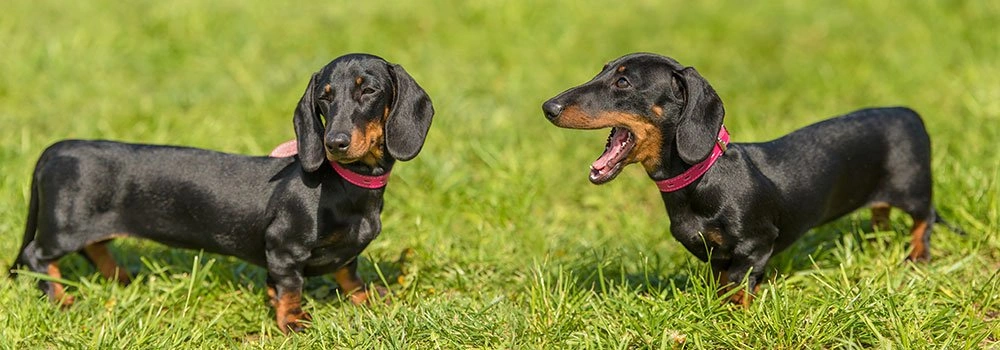
Few dogs are as instantly recognizable or brimming with personality as the Dachshund. Often affectionately called the “wiener dog” or “doxie,” this spunky breed consistently ranks among the most popular companion dogs in the United States. With their bold posture, comical proportions, and fierce loyalty, Dachshunds bring immense joy and amusement to any household.
However, beneath their endearing exterior lies a true working hound with high energy, sharp hunting instincts, and unique physical requirements. Understanding the details of this dachshund breed profile is essential to helping your pup thrive while protecting their long-term spinal health.
At Safe Journey Dog Boarding, we welcome dogs of all shapes and sizes into our supervised doggie daycare and social cage-free dog boarding programs. Our experienced handlers understand the unique social dynamics and physical considerations that small scent hounds require.
Here is everything you need to know about Dachshund traits, history, health considerations, and daily care.
Dachshund Appearance: Distinct Silhouettes and Coat Varieties
The Dachshund’s silhouette is unmistakable: an elongated, muscular back perched upon short, powerful legs, crowned by an upright head with long, velvety drop ears and dark, expressive eyes.
Dachshunds are officially recognized in two sizes and three distinct coat varieties:
- Size Categories:
- Standard: Typically weighs between 16 and 32 pounds.
- Miniature: Weighs 11 pounds and under at maturity.
- Coat Types:
- Smooth (Short-Haired): Sleek, glossy, and short. They are light-to-moderate shedders and require only occasional brushing to stay clean.
- Wirehaired: Features a thick, coarse double coat complete with bushy eyebrows and a charming beard. They require hand-stripping or routine trims to maintain coat texture.
- Longhaired: Features flowing, silky hair that often drapes toward the floor, with elegant feathering along the legs, chest, and tail. Daily brushing is necessary to prevent painful mats and tangles.
Surprising Facts and Hunting Heritage
While modern Dachshunds love cuddling under blankets, their ancestry is rooted in rigorous underground pursuit:
- Badger Hunters: The breed originated in Germany centuries ago to hunt badgers. Their elongated, low-slung build allowed them to burrow straight into underground dens, while their large paddle-shaped paws made quick work of heavy soil. In fact, “Dachshund” literally translates to “badger hound” in German.
- A Dog of Many Names: While known as Dachshunds internationally, they are commonly referred to as Dackels or Teckels in Germany.
- The Westminster Anomaly: Despite their enduring popularity as registered pets with the American Kennel Club (AKC) Dachshund Breed Profile, a Dachshund has never won the coveted Best in Show title at the prestigious Westminster Kennel Club Dog Show.
Temperament and Behavior: Bold Hounds at Heart
Despite their compact stature, Dachshunds are hounds through and through—not lap toys. Their strong instincts shape everyday behavior in distinct ways:
- Fierce Loyalty and Affection: Doxies form exceptionally deep attachments to their primary caregivers. Once they trust you, they want nothing more than to curl up on your lap or burrow beneath sofa cushions.
- Vocal Watchdogs: Dachshunds have a surprisingly deep, loud bark designed to alert subterranean hunters above ground. If unmanaged, this alert instinct can easily turn into nuisance territorial barking.
- Protective and Independent: Their intense devotion can sometimes manifest as possessiveness over family members or wariness around unfamiliar faces. Early socialization is crucial to prevent barrier reactivity or defensive snapping.
- Tenacious Diggers: Never underestimate a Dachshund in a fenced yard. Their digging instinct is deeply ingrained; they will readily excavate gardens or attempt to tunnel under fence lines if left unattended.
Critical Health Concerns: Protecting the Dachshund Spine
The long, low back that defines the Dachshund is also their greatest physical vulnerability. Taking preventative health measures early helps avoid severe orthopaedic conditions:
1. Intervertebral Disc Disease (IVDD)
Dachshunds carry the genetic marker for chondrodysplasia (dwarfism), which places substantial mechanical stress on their spinal vertebrae. Approximately one in four Dachshunds will experience IVDD—a condition where the discs between the spinal vertebrae degenerate, herniate, or rupture, causing severe pain, nerve compression, or paralysis.
2. Patellar Luxation
Due to their short, curved limbs, Dachshunds are also predisposed to luxating patellas (kneecaps that slip out of their femoral groove), leading to sudden hopping or intermittent lameness.
Daily Spinal Care Tips:
- Eliminate Jumping: Train your Dachshund to use pet ramps rather than jumping on or off beds, couches, or vehicle seats. The impact of landing on hard flooring compresses spinal discs.
- Support the Spine When Lifting: Always lift a Dachshund with two hands—supporting their chest with one hand and their hindquarters with the other. Never lift them by their front armpits.
- Use a Harness for Walks: Standard neck collars exert undue pressure on the cervical spine when a dog pulls. A well-padded chest harness disperses pressure safely.
- Maintain a Lean Body Weight: Excess weight puts massive strain on a Dachshund’s back and joints. Controlled portions and daily exercise are non-negotiable.
If your pup has experienced spinal stiffness, mobility challenges, or requires strict medication administration, choosing specialty dog care ensures their physical restrictions are handled with attentive caution.
Is a Dachshund Right for Your Household?
Dachshunds make fantastic companions for individuals and families who appreciate big canine personalities in compact packages. They adapt remarkably well to apartment living provided they receive structured daily walks, indoor puzzle games, and safe exercise outlets.
Because they can be sensitive about rough handling, households with young children should supervise all interactions and teach kids to handle small dogs gently without tugging ears or disturbing them while resting.
Safe Boarding and Daycare Tailored for Dachshunds
Long workdays or out-of-town trips mean finding a pet care provider that respects your dog’s physical limitations. At Safe Journey Dog Boarding, our handlers understand that long-backed breeds require monitored playgroups that prevent rough-and-tumble jumping.
Whether your doxie needs active daytime enrichment with supervised play in our doggie daycare or cozy overnight accommodations in our overnight dog boarding, we keep your pet happy, engaged, and physically secure.
For pets recovering from spinal treatments or those that feel safest inside their home routine, personalized in-home dog sitting provides loving one-on-one companionship without the stress of an unfamiliar environment.
Give Your Wiener Dog the Care They Deserve
From their comical badger-hunting past to their loving presence on the sofa, Dachshunds are unforgettable family companions. By providing steady training, ample socialization, and proactive spinal care, you can ensure your doxie enjoys a vibrant, healthy life.
Have questions about our intake screening, ramp access, or lodging options? Review our FAQ page, learn how to get started with our team, or contact us today to place your pet’s reservation.