
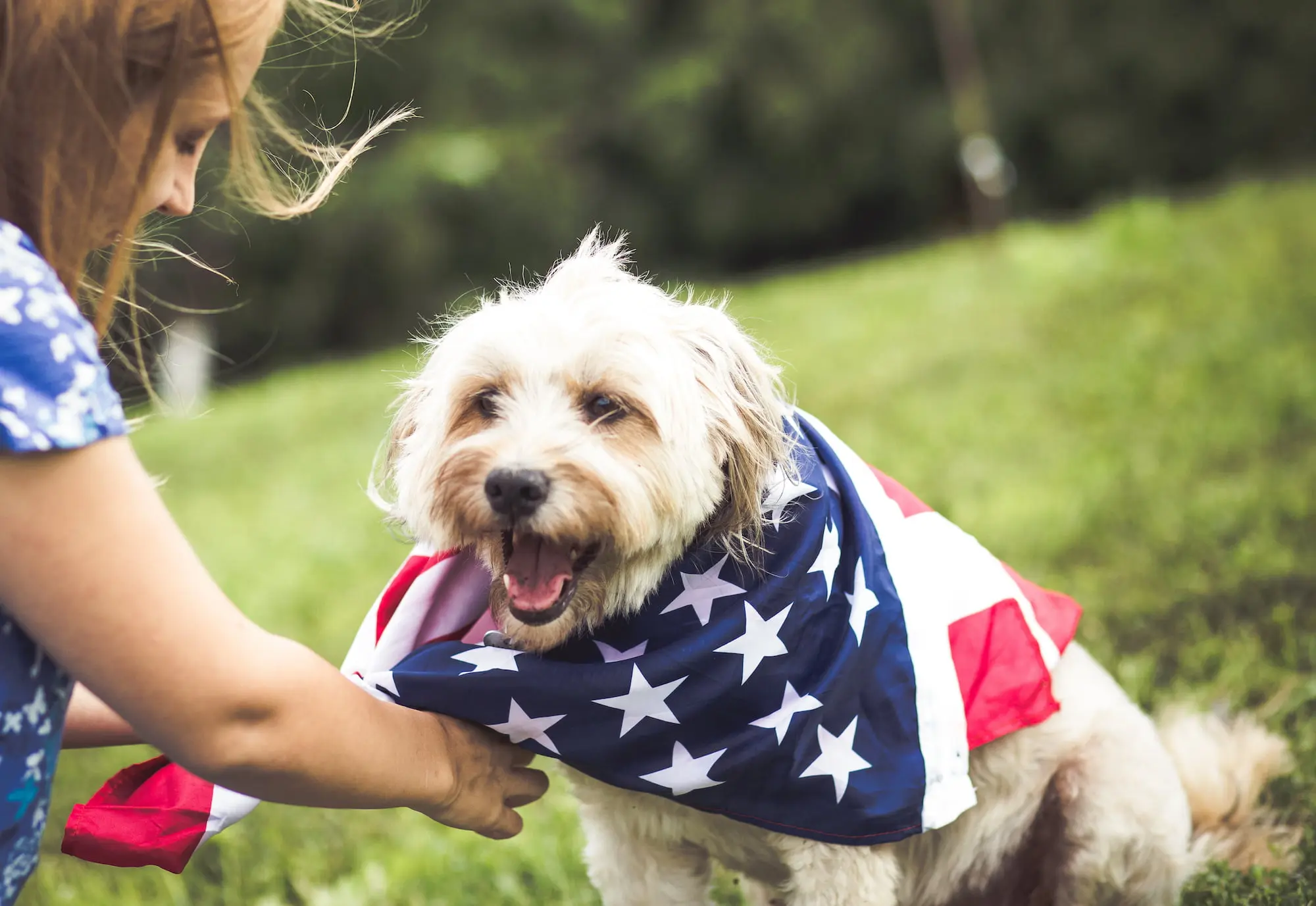
Independence Day is a time of outdoor barbecues, summer sunshine, and festive community gatherings. But while human family members look forward to colorful evening pyrotechnics, the holiday is often the single most terrifying night of the year for our canine companions.
Loud concussive booms, whistling rockets, flashes of blinding light, and the sharp scent of sulfur in the air trigger an intense fight-or-flight response in dogs. Sadly, animal shelters nationwide consistently report that July 4th and 5th see the highest surge in lost and runaway pets of any time of year, as panicked dogs jump fences and push through window screens to escape the noise.
Understanding dog 4th of July anxiety allows you to take proactive steps long before the first firework goes off. With thoughtful environmental preparation, soothing distractions, and medical support when necessary, you can help your four-legged best friend feel safe, secure, and relaxed all holiday weekend.
At Safe Journey Dog Boarding, our nearly 3,000-square-foot home-style facility in Milwaukie provides a cozy, insulated refuge for pets across the Portland metro area. Through our supervised doggie daycare and social cage-free dog boarding programs, we prioritize canine comfort and emotional well-being throughout every season of the year.
Here is your comprehensive guide to understanding canine noise aversion, setting up a holiday bunker, and easing fireworks distress.
Why Fireworks Trigger Intense Panic in Dogs
To effectively soothe your companion, it helps to understand why fireworks are so uniquely distressing to the canine nervous system:
- Acute Auditory Sensitivity: Dogs hear frequencies up to 45,000 Hz (compared to roughly 20,000 Hz in humans) and detect sounds four times farther away than we can. What sounds like a distant pop to human ears registers as a deafening, thunderous explosion to a dog.
- Low-Frequency Concussions: Fireworks produce deep barometric vibrations that shake the ground and resonate in a dog’s chest cavity, creating a visceral sensation of physical danger.
- Unpredictability: Unlike summer thunderstorms, which are preceded by gradual shifts in wind, barometric pressure, and darkening clouds, fireworks detonate without warning, making it impossible for a dog to anticipate the shock.
- Sensory Overload: The combination of sudden explosions, visual flashes entering dark rooms, and the acrid smell of burning gunpowder triggers sensory overload and acute survival terror.
According to veterinary noise aversion resources from the American Veterinary Medical Association (AVMA), noise aversion is a progressive condition. Left unmanaged, mild uneasiness during fireworks can escalate into severe, generalized panic phobias that affect everyday life.
6 Practical Strategies to Ease Fireworks Anxiety
Managing fireworks distress requires a layered approach combining environmental management, mental enrichment, and behavioral conditioning:
1. Build an Interior “Bunker” Safe Space
Create a secure, den-like retreat in the quietest, most interior area of your home:
- Choose Windowless Rooms: A walk-in closet, finished basement, or interior bathroom works best because these spaces are naturally insulated from outdoor sound and flashes.
- Set Up a Cozy Den: Place their favorite dog bed or crate in the room. Drape a thick, heavy blanket or sound-dampening quilt over the top and sides of the crate to muffle noise, leaving the door securely propped open so your dog does not feel trapped.
- Add Scent Comfort: Place an unwashed sweatshirt or blanket carrying your scent inside their resting area to provide olfactory reassurance.
2. Lock Down the House and Mask Sounds
Before neighborhood fireworks begin at dusk, secure the entire perimeter:
- Seal Windows and Doors: Close all windows, exterior doors, and pet flaps tightly to block noise and prevent frantic bolt attempts. Draw blackout curtains or heavy blinds to eliminate visual flashes of light.
- Layer Background Sound: Run box fans, air purifiers, or white noise machines near exterior walls. Play classical music, soft reggae, or specialized canine acoustic tracks (such as Through a Dog’s Ear) at a moderate volume to disguise the percussive impact of sudden booms.
3. Provide High-Value Licking and Chewing Enrichment
Chewing and licking stimulate the canine vagus nerve, triggering the release of serotonin and endorphins that naturally lower heart rate and reduce stress:
- The Frozen KONG Trick: Stuff several durable rubber KONG toys with canned wet food, plain canned pumpkin, and a smear of dog-safe peanut butter (verify that it is 100% xylitol-free), and freeze them solid.
- Long-Lasting Chews: Offer a natural bully stick or textured dental chew right as the evening festivities begin. Working on a challenging treat gives your dog a constructive mental job and redirects their focus away from outside commotion.
4. Practice Gradual Desensitization Training
If you have several weeks before the holiday, desensitization can dramatically improve your dog’s tolerance:
- Play recordings of fireworks sound effects from audio platforms at a barely audible whisper while engaging your dog in fun games of fetch or scattering high-value treats on a snuffle mat.
- Over several weeks, gradually increase the volume by small increments, ensuring your dog remains relaxed and continues eating.
- Pairing low-level sound with positive rewards teaches the brain to associate distant rumbles with food rather than danger.
5. Utilize Calming Aids and Veterinary Medications
For dogs with moderate to severe noise phobias, behavioral tools alone may not be enough:
- Compression Wraps: Anxiety vests or compression shirts apply gentle, continuous torso pressure—similar to swaddling an infant—which can help ground nervous pets.
- Pheromone Diffusers: Canine appeasing pheromone (Adaptil) diffusers plugged into your safe room mimic the calming nursing pheromones released by a mother dog.
- Prescription Medications: If your dog trembles uncontrollably, drools excessively, or attempts self-harm, consult your veterinarian well in advance of the holiday. Modern medications—such as Sileo (an FDA-approved gel specifically formulated for canine noise aversion), Trazodone, or Gabapentin—can safely reduce panic without heavily sedating your pet.
6. Maintain Calm, Grounded Leadership
Dogs take emotional cues directly from their human handlers:
- Avoid rushing over to coddle your dog with anxious, high-pitched baby talk (“Oh poor baby, it’s so scary!”), which can inadvertently validate that the situation is alarming.
- Similarly, never scold or punish a dog for trembling, whining, or pacing.
- Sit quietly near your dog, offer slow, firm strokes along their side or chest, and speak in a calm, low, reassuring tone. Projecting quiet confidence lets your companion know that their environment is secure.
Essential Holiday Safety and Escape Prevention Checklist
Take these essential precautions before the celebrations get underway:
- Exercise Early in the Day: Complete all long neighborhood walks, bathroom trips, and vigorous games of fetch in the morning or early afternoon, long before dusk when amateur fireworks begin.
- Verify Microchip and ID Tags: Ensure your dog wears a secure, flat collar with clear, updated ID tags containing your current cell phone number. Check that your dog’s microchip contact information is registered and accurate in the national database.
- Never Bring Dogs to Fireworks Displays: Leaving a dog in a parked car or bringing them on a leash to a community park show is extremely dangerous. The sudden sensory assault can cause even the gentlest dog to snap leashes or suffer heatstroke inside vehicles.
Supportive Care Solutions for Holiday Weekends
Managing an anxious pet during summer holiday travel can be overwhelming, especially if your plans require you to be away from home:
- Gentle Care for Fragile Pets: If your companion is an aging senior, has heart sensitivities, or manages complex medication protocols that require careful timing during stressful holidays, our dedicated specialty dog care program guarantees gentle, individualized oversight.
- Dedicated In-Home Attention: For pets that feel safest remaining inside their own sound-insulated living room, personalized in-home dog sitting ensures they receive continuous human comfort and uninterrupted routines.
- Secure Overnight Lodging: If your neighborhood becomes a hotspot for loud street fireworks, our climate-controlled overnight dog boarding suites offer a structured, safe, and supervised retreat where your dog is surrounded by caring attendants 24/7.
Keep Your Best Friend Safe and Serene This 4th of July
With thoughtful preparation, a cozy safe retreat, engaging puzzle treats, and veterinary support when needed, you can help your companion navigate holiday fireworks with minimal stress. Taking proactive steps today ensures that your entire household enjoys a peaceful, safe, and happy Independence Day celebration.
Have questions about our holiday boarding policies, intake assessments, or facility amenities? Explore our health and safety standards on our FAQ page, learn how to get started with an intake visit, or contact us today to make your pet’s reservation.