
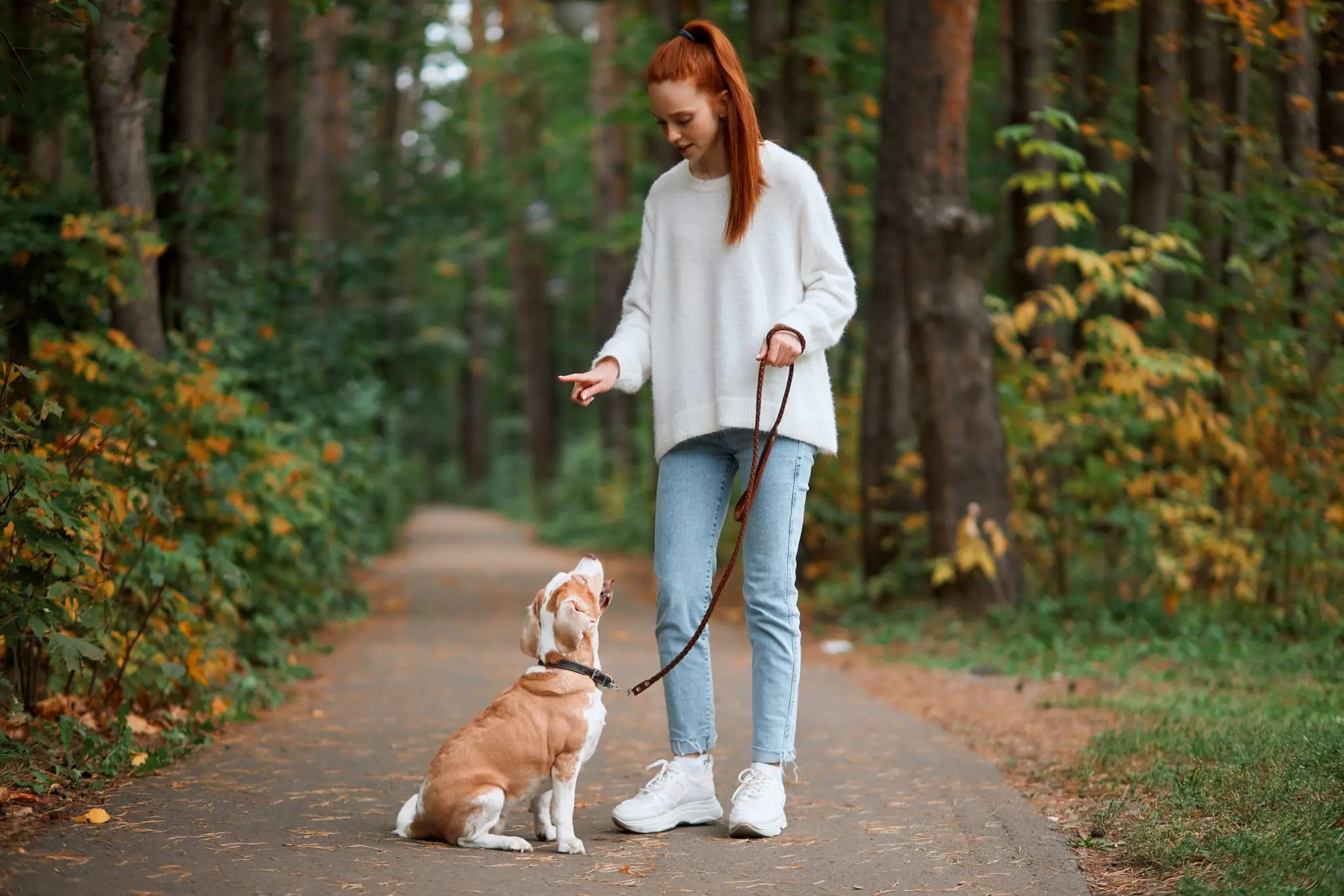
Welcoming a dog into your household brings endless energy, companionship, and affection. However, without clear guidance, even the sweetest companion can develop chaotic habits—such as jumping on guests, barging through doorways, stealing food off kitchen counters, or claiming every piece of furniture as their own.
Dogs thrive on structure. When humans do not establish clear household guidelines, dogs naturally invent their own rules, which frequently leads to confusion, frustration, and behavioral regression.
Practicing intentional dog boundary training is not about harsh discipline or exerting dominance. Instead, it is about giving your dog a predictable framework that teaches impulse control, respects personal space, and keeps everyone safe.
At Safe Journey Dog Boarding, structured boundaries and calm communication shape our supervised doggie daycare and social cage-free dog boarding programs. When dogs understand where their boundaries begin and end, they feel significantly more relaxed and secure in group settings.
Here are the key benefits of establishing household rules, along with five practical steps to teach your dog boundaries with confidence and consistency.
Why Boundary Training Is Essential for Every Dog
Teaching your dog boundaries does far more than preserve your furniture—it directly supports their mental and emotional well-being:
- Lowers Canine Anxiety: Unpredictable environments create stress. When a dog knows exactly what is expected of them in every room, their baseline anxiety drops dramatically.
- Prevents Dangerous Accidents: Boundaries around front entryways, patio gates, and car doors prevent sudden bolting into busy streets.
- Fosters Social Manners: Dogs that understand spatial boundaries greet unfamiliar people and playmates politely rather than crowding personal space or jumping impulsively.
- Builds Stronger Communication: Setting boundaries teaches your dog to look to you for guidance and permission before reacting to tempting environmental stimuli.
1. Claim Your Physical Space and Define Off-Limit Zones
The first step in dog boundary training is establishing which areas of your home belong to the human family members and require an invitation to enter:
- Designate Clear Zones: Decide early on which areas are off-limits—such as the kitchen during meal prep, formal living rooms, or specific furniture like the master bed or sofa.
- Use Management Tools Initially: Set your dog up for success by physically blocking access with sturdy baby gates, exercise pens, or closed doors while they learn. Preventing self-reinforcing mistakes (like jumping on the couch while you are in another room) is half the battle.
- Teach the “Out” or “Back Up” Cue: When your dog approaches an off-limits threshold, stand tall, walk gently forward into their space, and use a calm verbal cue like “Out.” The moment they step back across the doorway or threshold, immediately praise and reward them. They will quickly learn that crossing the line causes humans to close off space, while staying back earns praise.
2. Provide Calm, Benevolent Leadership (Ditch the “Alpha” Myth)
Historically, old-school training advice insisted that owners must be the “alpha pack leader” through physical force or intimidation. Modern canine behavioral science has thoroughly debunked this outdated mindset.
- Leadership Through Predictability: True leadership is about being a calm, reliable guide. Control the resources your dog values—food, attention, outdoor access, and toys—and use them to reward polite manners.
- The “Nothing in Life Is Free” Rule: Require your dog to offer a calm behavior (such as a steady “Sit” or “Watch Me”) before unclipping their leash, putting down their food bowl, or opening the backyard door. This establishes that self-control and cooperation unlock the things they desire.
According to behavioral training resources from the American Kennel Club (AKC) Impulse Control Guide, teaching canines that patience and restraint earn high-value rewards builds lasting impulse control far more reliably than punishment-based corrections.
3. Teach a Rock-Solid “Wait” Command
Door dashing is one of the most hazardous behavioral issues dog parents face. Teaching a dependable “Wait” cue turns every threshold into an automatic pause:
- Start at Closed Doors: Put your dog on a leash and stand before an exterior door. Ask for a “Sit.”
- Crack the Door Open Slightly: Begin turning the doorknob and opening the door just two inches. If your dog twitches or attempts to lunge forward, immediately close the door with a calm, neutral motion.
- Reward the Pause: Re-open the door slowly. As long as your dog remains seated and holds back, say “Wait.”
- Give the Release Cue: Once the door is fully open and your dog remains steady, give a cheerful release cue like “Free!” or “Let’s go,” inviting them to walk through with you.
- Generalize Across Contexts: Practice the “Wait” boundary at car doors, crate openings, food bowls, and patio gates until waiting for permission becomes their default habit.
4. Redirect Unwanted Behaviors in the Moment
Dogs live strictly in the present moment. If your dog jumps onto the dining room table or chews a baseboard, waiting even 10 seconds to address the behavior renders the correction meaningless.
- Catch Them in the Act: Address unwanted behavior the split second it begins with a firm, neutral verbal interrupter (like “Ah-ah” or “Off”).
- Always Provide an Approved Alternative: Merely telling a dog what not to do leaves them confused. If you tell them to get off the sofa, direct them immediately to their designated dog bed or mat and reward them lavishly once all four paws are settled. Teaching a positive replacement behavior (“Go to your place”) gives your dog a clear, rewarding job to perform.
If your companion is an aging senior, struggles with physical mobility, or manages specific medical restrictions that require specialized physical accommodations, our specialty dog care program ensures their physical boundaries are respected and managed with personalized care.
5. Maintain Household Consistency Without Exceptions
The single greatest roadblock to successful boundary training is human inconsistency. Dogs do not understand exceptions or gray areas:
- Align Every Family Member: If one person lets the dog beg at the dinner table or leap onto the bed while another scolds them for it, the dog will become stressed and persistent. Every household member must enforce the exact same boundaries using the same verbal cues.
- Eliminate Intermittent Reinforcement: If your dog begs or paws at you and gets attention 1 out of 20 times, that behavior becomes an addictive jackpot game. Consistent enforcement ensures habits solidify quickly.
Supporting Boundary Skills with Professional Daycare and Sitting
Maintaining consistent training boundaries while juggling busy work schedules and travel can be challenging. Working with experienced pet professionals reinforces your dog’s manners:
- Healthy Pack Manners in Daycare: Our supervised daytime playgroups encourage polite canine communication, respectful spatial boundaries, and controlled play styles under the active guidance of trained attendants.
- In-Home Consistency: If your dog thrives best practicing routines in their home environment, dedicated in-home dog sitting maintains their established feeding schedules, walking routes, and boundary cues while you are away.
- Safe, Home-Style Lodging: When you need to travel out of town, our climate-controlled overnight dog boarding suites provide 24/7 care in an open, home-style setting that minimizes stress and keeps pets feeling secure.
Build a Calm, Respectful Bond with Your Companion
Teaching your dog boundaries is one of the greatest gifts you can provide for their safety and happiness. By defining spaces, rewarding impulse control, and maintaining steady consistency, you establish a harmonious home where your dog feels confident, trusted, and truly at ease.
Have questions about our intake screening, behavioral evaluations, or facility policies? Explore our health standards on our FAQ page, learn how to get started with our team, or contact us today to make your pet’s reservation.